
Rebuilt from a real proposal
What a Solar PPA Proposal Looks Like
A real solar PPA proposal, line by line. Crest Community Centre's numbers, from the system to the 15-year saving, in our own layout.
No obligation, and nothing to pay to see your own.

“With that saving, most importantly for us, we can give back to the community.”
£0 up front
Our funding partner pays for the system. Not even a deposit
Fixed for 15 years
Between 16p and 23p per kWh today, depending on the site (September 2026)
 NAPIT
Our installers are accredited
Our installation partners are MCS registered, and RECC and NAPIT accredited
One person to call
Dave handles the funder, the installer and the grid for you, first call to first bill
- System size (peak output)
- 50 kWp
- Power it makes each year
- 36,290 kWh
- Fixed price for 15 years
- 18p per kWh (was 37p)
- Saving in year one
- £4,739
- Saving over 15 years
- £131,796
The 15-year figure assumes grid prices rise 5% a year. Your proposal works out your own figures, never a promise.
The whole proposal on one card
A real solar PPA proposal, rebuilt so you can read every line
A power purchase agreement (PPA) is a deal where someone else pays for the panels and you buy the power they make. The proposal is the document that tells you, before you sign anything, exactly what that means for your site.
This one is Crest Community Centre's, dated 3 February 2026. We rebuilt it in our own layout and left off the funder's name and branding. The figures are Crest's, line for line. Most commercial solar sites show a typical site. This is a real one.
Below, each part is one section of the proposal, in order. Compare it with buying outright if you want to weigh the two routes.
What is in it
Six things every proposal tells you, in writing
Our funding partner's design team makes each proposal from your own bills and roof. These six parts are in all of them.
The system
How big it is, which panels and inverter, and how much power it should make in a year.
Your fixed price per kWh
What you pay for the solar you use. A kWh (kilowatt hour) is the unit of electricity on your bill.
Your savings
In year one and over 15 years, worked out from your own bills. Illustrative, never a promise.
The bill before and after
What you pay the grid now, and what you pay the grid and the PPA once the system is on.
Your buy-out price for every year
Printed in full, falling each year to £1 at year 15.
The carbon saving
How much carbon the system saves each year, by the funder's calculation.
Part 1: the site
A community centre with 40-plus staff, a food bank and a radio station
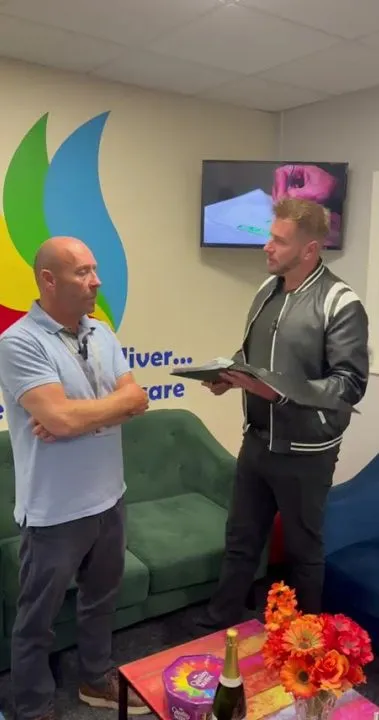
Crest Community Centre is a charity on Ferry Farm Road in Llandudno Junction. Rod, its managing director, says it employs 40 plus local staff. Volunteers and adults with additional learning needs are on site too.
The centre runs a community food bank and a volunteer-run community radio station. Rod says the savings from the PPA are what lets Crest give back to the community.
Like Samuel at Lesters Farm Shop, Rod was sceptical at first. Read the Crest case study
Part 2: the system
The system: 50 kWp of panels making 36,290 kWh a year
The funder's design team sizes the system to the building's real daytime use, so nobody pays for power they cannot use.
| Line in the proposal | Crest's figure | In plain words |
|---|---|---|
| System size | 50 kWp | A kWp is a kilowatt peak, the most the panels can make in perfect sun. We write for sites of 50 kW and up, and 20 kW is the smallest we propose. |
| Panels | 81 Canadian Solar 615 W bifacial | Each panel is 615 watts. Bifacial panels also catch light that bounces up from below. 81 of them make about 50 kWp. |
| Inverter | 40 kW | The box that turns the panels' power into the kind your building uses. It sits between the roof and the building's supply. |
| Power it makes in a year | 36,290 kWh | This is the funder's forecast. The funder only earns on what the system generates, so it has no reason to overstate it. |
The funder's design team picks the kit for each site. Yours may use different panels or a different inverter.
Part 3: how much of the building's power the roof covers
71% of annual needs, and 69% of the power used on site
These two percentages look alike but count different things. Here is each one.
| Line in the proposal | Crest's figure | In plain words |
|---|---|---|
| Power the building uses in a year | 51,314 kWh | This comes from the 12 months of usage data we ask for. |
| Power the roof makes in a year | 36,290 kWh | From the system section above. |
| Share of annual needs covered | 71% | What the roof makes, as a share of what the building uses over a year. |
| Share of the solar used on site | 69% | Of what the roof makes, this part is used by the building as it is made. |
| Share sent to the grid | 31% | The rest flows out to the grid, and the funder sells it. Crest pays nothing for it. |
You only pay for the solar you actually use. When the roof cannot cover demand, the building draws from the grid as normal, from the same supplier as before.
Part 4: the price
The price per kWh: Crest paid 37p, and now pays 18p for its solar
What Crest paid the grid for each kWh before
Its supplier's normal rate. Crest keeps the same supplier and the same contract.
What Crest pays for each kWh of solar
Billed on one monthly direct debit. The rate is set by the funder from the site's usage data.
How long the 18p stays fixed
It does not rise with inflation or the price cap. Your price per kWh will never change.
The 18p covers only the solar. The rest of the power still comes from the grid, at the usual rate. See how a PPA works day to day.
What Crest pays per kWh for its solar
- Crest's PPA price: 18p per kWh, fixed for 15 years
- The 19p it no longer pays on each unit of solar
Crest's real figures. Your own price is set from your usage data and sits between 16p and 23p today (September 2026).
Check my eligibilityFree, no obligation, about two minutesPart 5: the bill, before and after
The bill before and after: £18,986 down to £14,248 a year
Before solar, Crest paid £18,986 to the grid for 51,314 kWh. After solar, the grid bill drops to £9,758 for the power the roof cannot cover. The PPA bill is £4,490 for the solar Crest uses.
| One year of electricity | Before solar | With solar |
|---|---|---|
| Paid to the grid supplier | £18,986 | £9,758 |
| Paid for solar under the PPA | None | £4,490 |
| Total for the year | £18,986 | £14,248 |
| Saved in year one | £4,739 |
The proposal prints £4,739. It rounds each line, so adding the lines up yourself can land £1 away from the printed figure. That is normal.
Part 6: year one and 15 years
Year one and 15 years: what the £131,796 assumes
The year-one saving is worked out from today's prices. The 15-year figure has to look ahead, so it rests on one assumption, printed in the proposal's small print.
| Line in the proposal | Crest's figure | How to read it |
|---|---|---|
| Saving in year one | £4,739 | Today's prices, with nothing assumed. |
| Saving over 15 years | £131,796 | The savings for each of the 15 years, added up. |
| The assumption | Grid prices rise 5% a year | Each year, the grid price is taken to be 5% higher than the year before. |
| Why the saving grows | 18p stays 18p | The PPA price is fixed, so each year the gap between the grid and the PPA gets wider. |
That is why £131,796 is much more than 15 times the year-one figure. We think 5% is a careful figure, but it is a guess about the future. It is illustrative, never a promise. If grid prices rose less, the saving would grow more slowly. Your proposal works out your own.
Part 7: the way out
The buy-out list: what Crest could pay to own the system, every year
This is the part that makes the deal easy to trust. You can see your way out before you sign. The price falls each year, from the full value of the system to £1.
| When you buy | Crest's buy-out price | What it means |
|---|---|---|
| At the start (year 0) | £42,741 | The highest price on the list. |
| Year 5 | £28,487 | About two thirds of the starting price. |
| Year 10 | £14,233 | About a third of the starting price. |
| Year 14 | £2,829 | Almost nothing left to buy. |
| Year 15 | £1 | The end of the term. You own it. |
Until you buy, you keep paying 18p for the solar you use. If you sell the building, the deal can pass to the new owner at the same rate, or you can buy it out from this list.
Part 7, continued: year 15
At year 15 you have four choices
The panels carry a 30-year warranty, so there is plenty of life left in them. Your proposal sets out all four.
Buy it for £1
Then you own it, with at least another 10 years of free solar power ahead.
Agree a new price per kWh
Negotiate a fresh PPA and carry on as you are.
Stay at the same price for five more years
Then buy it for £1 at the end of those five years.
Pay to have it removed
The system comes off the roof, at your cost.
Part 8: carbon
Carbon: 8 tonnes a year, by the funder's calculation
The last figure in Crest's proposal is a carbon saving of 8 tonnes a year. That is the funder's calculation, not ours. Your proposal prints its own.
It is useful for CSR reports and net-zero targets. Check with whoever does your reporting how they want it counted.
The carbon figure is a result of the system, not the reason for it. The main reason is the lower bill.
How yours will differ
Three real proposals: the more you pay now, the more you save
Everything in a PPA is per kWh. So the saving depends on the gap between what you pay today and your fixed price.
| Compare | Crest | Lesters Farm Shop | A dairy farm in North Yorkshire |
|---|---|---|---|
| System | 50 kWp | 56.7 kW, with two EV chargers | 74 kW, with a 100 kWh battery |
| Power it makes in a year | 36,290 kWh | 47,210 kWh | 62,054 kWh |
| Paid per kWh before | 37p | About 23p | About 53p |
| PPA price per kWh | 18p | 17p | 21p, battery included |
| Saved in a year | £4,739 | £2,624 | £14,723 |
A battery is added only where usage justifies it, and it raises the price a little. The dairy farm figures are from a proposal. Read the Lesters Farm Shop case study, or see whether your site qualifies.
Watch it
Rod from Crest on the proposal that turned a sceptic round
He assumed there was a catch. Nearly four minutes, in his own words.
 Crest Q&A with Rod, 3:46
How yours gets made
From your bills and roof check to your proposal, in up to 5 working days
Before you decide anything
- 1
Tell us about your site
A few quick questions, about two minutes. Or just call. Dave calls back within 24 hours.
- 2
We check your roof and bills
A desktop survey from satellite images, plus the 12 months of usage data you send over.
- 3
Your proposal, on a video call
The funder's design team builds it in up to 5 working days. We go through it with you, and the funder joins so you can ask them anything.
- 4
Paperwork that doesn't bind you
Three first papers let us apply to the grid for you. They are not binding and stay open for 10 working days.
Once you've said yes
- 5
Site survey and grid approval (DNO)
A full survey on site. Then we apply to the grid operator and pay the fee. SP Energy Networks takes 2 to 3 weeks locally, and it can take up to 12 weeks where the operator is slower.
- 6
Fitted while you stay open
MCS-registered installers fit the system. Both our case-study customers stayed open throughout.
- 7
Switch-on and your first bill
The direct debit starts once the system is running. Dave comes back after a month to check your first bill with you.
In their own words
What Crest and Lesters said about the numbers
“With that saving, most importantly for us, we can give back to the community.”
“The savings are going to be a game changer for my business.”
Keep reading
Go further on PPAs

Solar PPA vs buying outright
Both routes on one table, and when buying is the better choice.
Find out more
How a PPA works, step by step
From the first call to the first bill.
Find out more
Solar PPA
The whole offer in one place.
Find out moreWhy we ask for your usage data · What commercial solar costs to buy
Where we work
Commercial solar across North Wales and the borders
Based in Colwyn Bay, working across North Wales, Mid Wales, Cheshire, the Wirral, Merseyside and Shropshire. Further afield, our funding partner has approved installers across Great Britain.
Questions
Questions about a solar PPA proposal
What does a solar PPA proposal include?
It states the system size, how much power it should make each year, your fixed price per kWh, and your savings in year one and over 15 years. It prints your buy-out price for every year, and the carbon saving. You read all of it before you sign anything.
Is this a real solar PPA proposal?
Yes. It is Crest Community Centre's, dated 3 February 2026, rebuilt in our own layout. Every figure is theirs. The original carries the funder's branding, which we do not publish.
What are average solar PPA rates?
We cannot speak for the whole market. Ours sit between 16p and 23p per kWh today (September 2026), fixed for 15 years. Crest pays 18p, Lesters Farm Shop pays 17p, and a dairy farm in North Yorkshire was offered 21p with a battery included.
How is the PPA rate set?
The funder sets it from your usage data. That is why we ask for 12 months of readings or bills before we can propose anything. The more you pay the grid now, the more a fixed price saves you.
How do you work out the 15-year saving?
The proposal assumes grid prices rise 5% a year, while your PPA price stays fixed. So the saving grows each year. It is a projection, never a promise. Grid prices could rise less or more, and your proposal shows your own figures.
How long does a proposal take, and do I have to sign anything?
Up to 5 working days from your bills and roof check. We go through it with you on a video call, and the funder and equipment partners join so you can ask them anything. Nothing binds you. The first papers stay non-binding for 10 working days.
What do I need to send to get a proposal?
Your postcode and a recent bill is enough to start. We check your roof from satellite images. For the full proposal we need 12 months of usage, ideally half-hourly smart-meter readings, otherwise a year of bills in kWh.
Will my proposal look like Crest's?
The layout and the sections will. The numbers will be yours. Your system size, price per kWh and buy-out list all come from your own site. A battery is added only where your usage justifies one, and it raises the price a little.
What does the proposal cost me?
Nothing, and there is no obligation. We are only paid when your system is switched on.
What if the panels make less than the proposal says?
You pay less. The proposal states how much the system should make, and you only pay for the solar you use. The funder only earns on what is generated, so it has no reason to overstate it.
See your own numbers, in this same layout
Send your postcode and a recent bill. We check your roof on a map, the funder's design team builds your proposal, and we go through it with you on a video call. No obligation. Yours back within up to 5 working days.