Case study: a charity in Llandudno Junction
Crest Community Centre: 50 kWp, £4,739 a Year Saved, £0 Spent
Crest is a charity with 40-plus local staff. It paid nothing to have solar fitted, and now pays 18p per kWh for the power its roof makes, down from the 37p it paid the grid. Here is the whole story, and every figure.
Figures from Crest's proposal of 3 February 2026. Savings are illustrative, never a promise.

“With that saving, most importantly for us, we can give back to the community.”
£0 up front
Our funding partner pays for the system. Not even a deposit
Fixed for 15 years
Between 16p and 23p per kWh today, depending on the site (September 2026)
 NAPIT
Our installers are accredited
Our installation partners are MCS registered, and RECC and NAPIT accredited
One person to call
Dave handles the funder, the installer and the grid for you, first call to first bill
The system at a glance
What is on Crest's roof, and what it makes
Size is counted in kW (kilowatts) and energy in kWh (kilowatt-hours), the unit your bill uses. kWp means the most the panels can make in perfect light. The inverter is the box that turns the panels' power into the kind the building uses.
Who they are
A charity that watches its costs, and assumed there was a catch
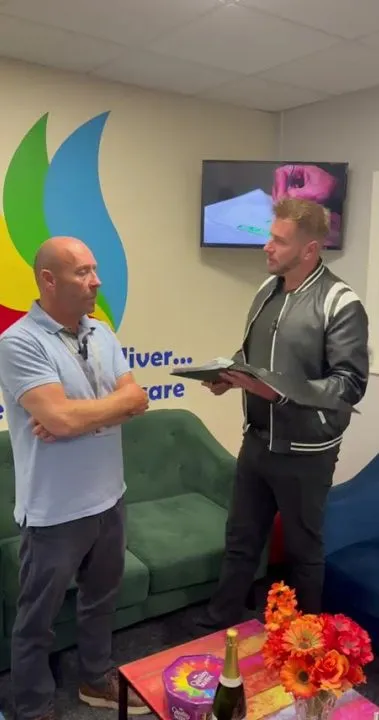
Crest Co-Operative runs Crest Community Centre on Ferry Farm Road in Llandudno Junction. It employs 40-plus local people. Volunteers and adults with additional learning needs are on site too, so the building is busy.
Like any charity, Crest feels the cost of energy. It was an obvious place to save. But Rod, the managing director, was sceptical. You never get anything for free in this life, he says. What changed his mind was the detail. We went through the figures with him and showed how the deal would benefit Crest as an organisation.
The deal is called a power purchase agreement, or PPA. Someone else pays for the panels and the fitting. You buy the power they make, at a price fixed in advance. These are the questions most owners ask. Who pays? What is in it for them? What do we sign? Our page on how a PPA works answers each one.
The money
From 37p to 18p for every kWh the roof covers
What Crest paid per kWh before
The grid price. It came to £18,986 a year, on 51,314 kWh.
What Crest pays per kWh for the solar it uses, fixed for 15 years
The funder sets it from Crest's own usage data. Crest pays it by one monthly direct debit.
Saved in year one
Grid £9,758 plus PPA £4,490 comes to £14,248, against £18,986 before. These are proposal figures, so illustrative.
Crest pays only for the solar it uses. That is 69% of what the roof makes. The other 31% goes to the grid, and the funder earns from that, not Crest.
Crest's price per kWh, before and after
- Crest now pays 18p per kWh for the solar it uses
- The rest of the 37p it no longer pays on that power
From Crest's proposal of 3 February 2026. Savings are illustrative, never promised. Your proposal works out your own.
Check my site's eligibilityFree, no obligation, about two minutesWhere the money goes
What the saving pays for: a food bank and a radio station
Rod says the most important thing about the saving is what it lets Crest do.
A community food bank
Crest runs it for families in food poverty, and subsidises it itself. The saving helps cover that cost.
A volunteer-run radio station
A community station, run mostly by volunteers. Its costs come out of Crest's surplus and cash reserves, and the saving takes some of that pressure off.
Lower carbon too
The funder calculates the system saves about 8 tonnes of carbon a year.
Watch it
Rod on why he said yes, in his own words
Nearly four minutes. He covers the doubt, what the install was like and what the saving is for.
 Crest Q&A with Rod, 3:46
What Rod said
Five things Rod told us about the deal
“I was pretty sceptical initially because you never get anything for free in this life. But once Dave broke down the detail and explained to me how it would benefit Crest as an organisation, it became quickly to me a bit of a no-brainer.”
“We didn't even know they were there half the time. There was minimal disruption. They were clean, polite, professional.”
“The job was done excellently and in good time.”
“With that saving, most importantly for us, we can give back to the community.”
“100%. We've been through it cradle to grave.”
The install
What fitting 50 kWp looked like
A short film of the installation at Crest, 1 minute 51. The centre stayed open the whole time. See how every job runs, from the first call to your first bill.
 The 50 kW installation at Crest, 1:51
Every figure
Crest's proposal, line by line
These are the numbers in Crest's proposal of 3 February 2026. The proposal rounds, so totals can differ by £1.
| Item | Crest's proposal |
|---|---|
| Who | Crest Co-Operative Ltd, a community centre and charity on Ferry Farm Road, Llandudno Junction |
| System | 50 kWp: 81 Canadian Solar 615 W bifacial panels (they catch light on both faces) and a 40 kW inverter |
| Power made each year | 36,290 kWh |
| Share of Crest's yearly needs | 71% |
| Used at Crest, and sent to the grid | 69% used at Crest, 31% exported |
| Price per kWh before | 37p, the grid price |
| Price per kWh now, for the solar it uses | 18p, fixed for the whole 15-year term |
| Grid bill before | £18,986 a year, on 51,314 kWh |
| Cost after solar | Grid £9,758 plus PPA £4,490 comes to £14,248 a year |
| Saving in year one | £4,739 |
| Saving over 15 years | £131,796, assuming grid prices rise 5% a year |
| Buy-out price at the start | £42,741 |
| Buy-out price at year 5 | £28,487 |
| Buy-out price at year 10 | £14,233 |
| Buy-out price at year 14 | £2,829 |
| Buy-out price at year 15 | £1 |
| Carbon saved | About 8 tonnes a year (the funder's calculation) |
The buy-out price is what Crest would pay to own the system outright. It falls each year to £1 at year 15, and Crest can use it at any time. The 15-year saving assumes grid prices rise 5% a year. If they rise more slowly, the saving will be smaller. If they rise faster, it will be bigger. Every saving here is illustrative and never a promise. See a real proposal, line by line.
What a site like Crest's needs
Could your site do the same?
If your site ticks these four boxes and has no existing solar, there is a good chance it qualifies. Not sure? Send a postcode and a recent bill and we will check your roof on a map.
A three-phase supply
The stronger electricity supply most businesses have. The single-phase supply of a typical house caps a system at about 15 to 17 kW, which is too small.
About three-phaseRoom for 20 kW or more
That is about 45 to 50 panels on a roof or on land. Crest's 50 kWp took 81 larger panels.
Do you qualify?A year of usage data
Half-hourly smart-meter readings are best. Otherwise 12 months of bills in kWh will do. Crest used 51,314 kWh a year.
About half-hourly dataThe owner's agreement, if you rent
The building owner has to agree to panels on the roof. It helps them too, because the EPC rating can go up.
About EPC B and 2031Keep reading
Another case study, and where to go next
Crest is a charity. Lesters Farm Shop is a business with a different price and a different roof. Both are real, and both stayed open while the work was done.

Lesters Farm Shop, Buckley
56.7 kW, 126 panels and two EV chargers. About 23p down to 17p per kWh, and £2,624 saved a year.
Read the Lesters case study
Charities and community buildings
Churches, hospices, sports clubs and community centres. No capital to find, and the saving goes to the mission.
Find out more
A real proposal, line by line
Crest's proposal laid out in full, so you can see what yours would look like before you decide anything.
See the proposalWhere we work
Commercial solar near Llandudno Junction
Crest is in Conwy. We are based in Colwyn Bay and work across North Wales, so these are the places closest to it.
Find out in two minutes if your site qualifies
Tell us about your site, or ask us to call you. Your proposal comes back in up to 5 working days, worked out from your own bills.